
All About Banana Slugs
By Steve Wilent, For The Sandy Standard
What’s your favorite college mascot? Mine is, naturally for a woodsperson, the Oregon State University’s Benny Beaver. Beavers are forest critters, right? Little loggers. And OSU’s College of Forestry is arguably the nation’s No. 1 forestry school. Ducks? Booooo! My son Stewart, an OSU grad, is a Beavers fan. He has been heard to say something like, “Sure, ducks can fly, but I’d like to see one cut down a tree.” Go Beavs!
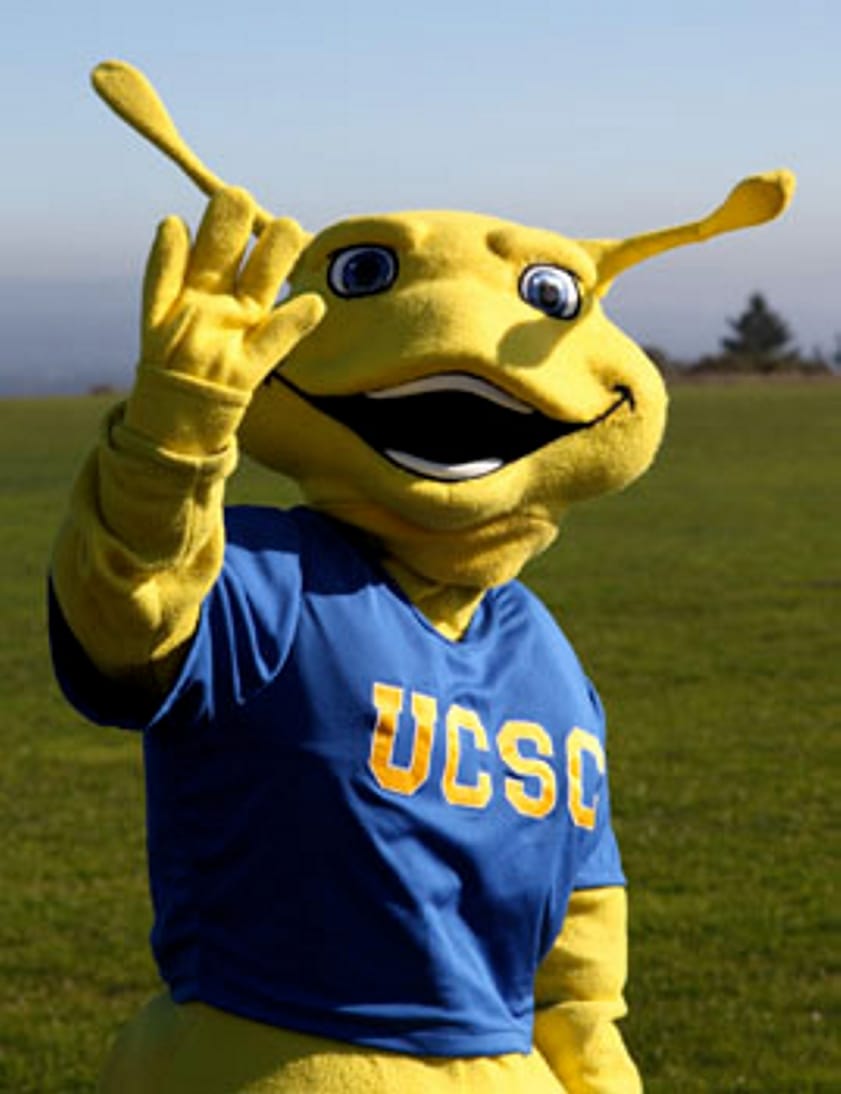
Some colleges have unusual and amusing mascots, such as Evergreen State College’s Geoduck, or “gooey-duck,” a type of clam. The Fighting Pickle represents the University of North Carolina School of the Arts. Fighting Pickle? Hmmm. But my second favorite mascot, whimsical or otherwise, is that of the University of California, Santa Cruz: Sammy the Slug. Well, sure, banana slugs inhabit the redwood forests around Santa Cruz. Makes perfect sense.
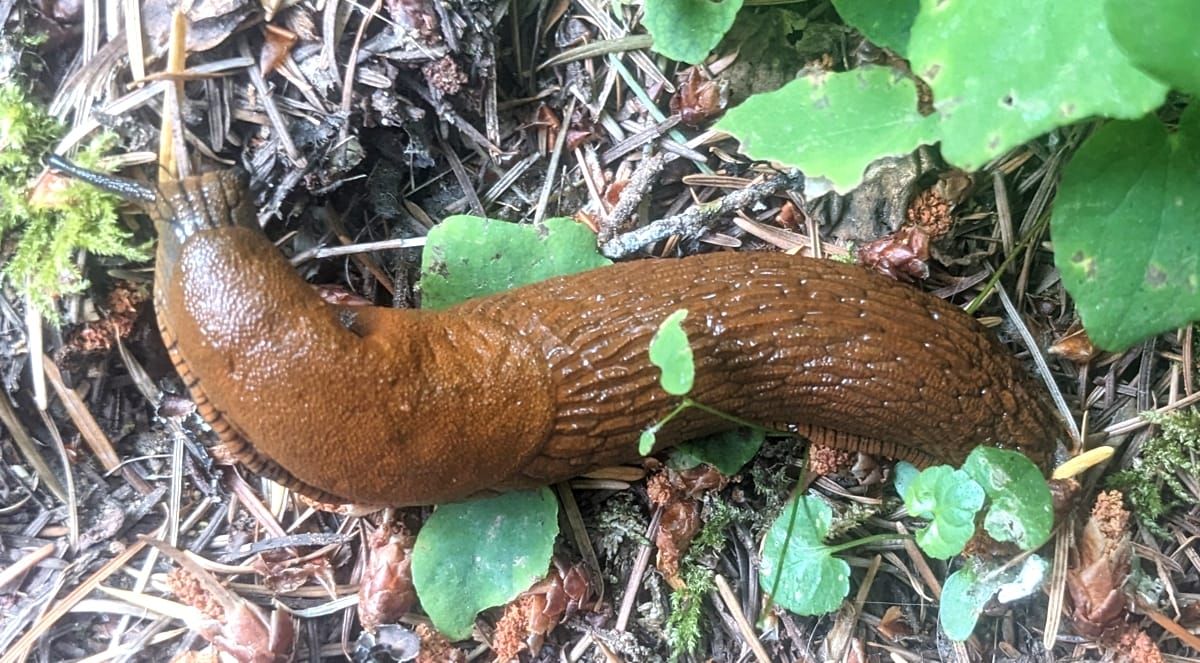
As you may know all too well, we have banana slugs in our area, too. You’ve seen them, their slime trails, and the poop they leave everywhere, including on walls and windows — outside walls, of course, unless they get inside, which is, fortunately, rare. On my property, I think the slugs are engaged in a contest to see which one can leave the most poop on the sides of my house and sheds. And they invite their friends from neighboring properties to compete.
According to the Oregon Department of Agriculture, there are 124 species of terrestrial mollusks (slugs and snails) in our state. Most of them are small and usually go unnoticed. The main difference between slugs and snails is that snails have a large, coiled external shell, and slugs do not have shells. Both types of critter move using a muscular “foot” and leave behind trails of slime. Over all, 22 percent of the slugs and snails in Oregon are not native to our state. Of the 29 species of slug found in Oregon, 15 are non-native.
Banana slugs, a species known as Ariolimax columbianus, are native to the west coast of the US and Canada, ranging from Alaska to southern California. They are happiest in cool, wet coastal Douglas-fir and redwood forests with plenty of decaying logs, moss, and dense undergrowth.
Banana slugs are one of the largest slugs in North America, with some reaching lengths of ten inches. Those I’ve seen at that length were in the coast redwoods in California. Some of these were bright yellow, thus the banana in the name. Here in our area, the longest I remember seeing have been in the six-inch range, and were green or reddish brown.
Here’s some banana slug trivia. These are great conversation starters at parties. Banana slugs can live as long as 7 years. They don’t hibernate, but spend the winter under logs or leaves. They can move up to 6.5 inches in a minute forward, but they can’t move backward. Slugs are herbivores, mostly — they eat plants (leaves, stems, roots, flowers, seeds, and fruit — but they sometimes eat fungi and even animal feces and carcasses.
Banana slugs are hermaphroditic, meaning that they have both male and female reproductive organs, which allows them to mate as either sex or even fertilize themselves (they prefer mating with another slug). They lay eggs under logs or in leaves. I won’t write more about slug sex, since this is a family newspaper, except to say that one of their body parts can, at times, be longer than their bodies.
To most people, banana slug slime is gross, gooey stuff that’s hard to wash off your hands or shoes. But the slime helps slugs move (including on your walls and windows), conserve water, and, through pheromones, communicate with other slugs. It also helps ward off predators. The slime, or mucus, contains chemicals that numb the tongues of any animal that tries to eat it.
Now for the subject I you’ve been hoping I’d bring up: Are banana slugs edible? Answer: yes, but…. I’ve heard that even raccoons won’t eat them. I’ve also heard that you can eat them after blanching them in vinegar to get the slime off, and then cooking them thoroughly, to kill off any dangerous bacteria and parasitic nematodes that may be inside.
Nicole Apelian says they are edible. She’s a survival skills expert known for living off the land by herself for 57 days on Vancouver Island as a contestant for the History Channel show, Alone (nicoleapelian.com/alone/). A 2018 article in Portland Monthly, she says, “They’re pretty good protein. The key is to cook them over the fire, like you would a hot dog. You put them on a stick and roast them over the fire until all of the slime falls off. They’re quite delicious.”
Well, some people find escargot — made from an entirely different type of slug — to be delicious and nutritious. Fair enough. I don’t. To each his or her own. My take: Do not eat banana slugs, cooked or otherwise.
Have a question about banana slugs? Know what movie featured a cameo appearance by Sammy the Slug on a T-shirt — and which well-known actor wore the shirt? Email: SWilent@gmail.com.