
Thimbleberry Collaborative Farm grows community while feeding those in need
In November 2021, the nonprofit Thimbleberry Collaborative Farm got its formal start when a team passionate about sustainable farming incorporated. The next summer, they planted their first seeds on a half-acre plot at the Headwaters Farm in rural East Multnomah County.
By Brit Allen, The Sandy Standard
In November 2021, the nonprofit Thimbleberry Collaborative Farm got its formal start when a team passionate about sustainable farming incorporated. The next summer, they planted their first seeds on a half-acre plot at the Headwaters Farm in rural East Multnomah County.
Nearly five years later, Amanda Martinez and the team are thriving on their own land in Boring, and have donated more than 12,000 pounds of produce to those in need within the past year.
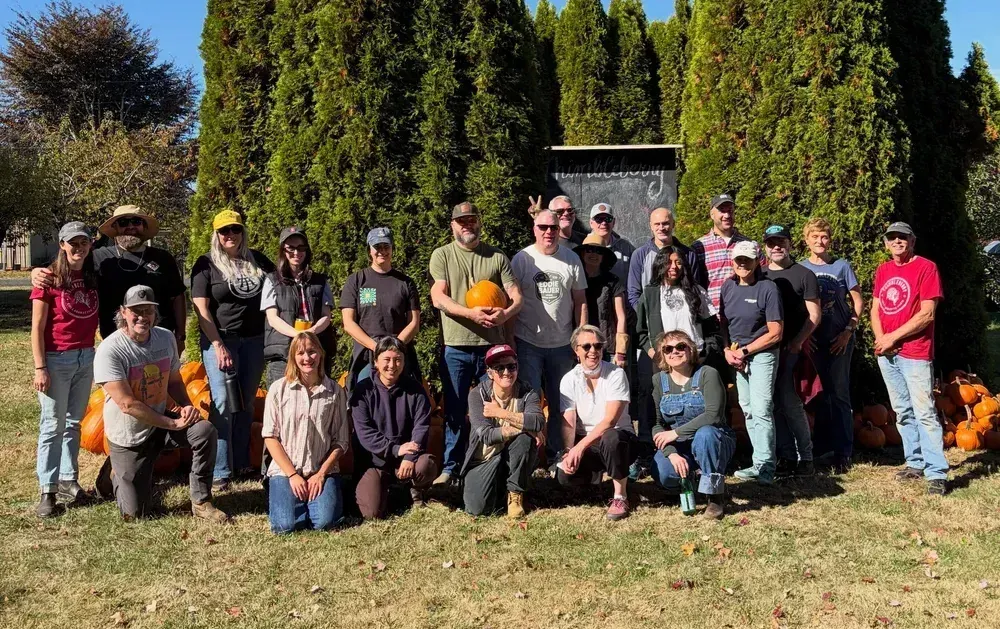
Thimbleberry grew from a longtime interest and passion of Martinez’s into the community focused space it is now, with the help of a 15-person founding committee and team of paid staff and volunteers.
“I’d always been drawn to farming and gardening,” Martinez explained. She studied sustainable food systems in college at Stanford, and worked there as manager of the school’s student farm. She also worked at an educational farm in California prior to her move to Oregon in 2018. “We’re a small team [at Thimbleberry], but I always want to recognize and thank the staff and board.”
When she wasn’t directly involved in the farming industry, Martinez worked as a manager for a summer camp and conference center in California, and then for College Possible in Oregon. The overall theme of serving others and bringing people together, especially those in underserved, rural spaces, has always been present for her.
As an educational and community collaborative farm, Thimbleberry welcomes hundreds of students and community members to their farm throughout the year. School groups come out for educational activities on site, and the team also hosts several volunteer days per week, during which attendees get to help with projects around the farm as well as do fun activities and, occasionally, enjoy farm-sourced, wood-fired pizza.
“I loved that educational farms have a unique opportunity to bring people together around a common purpose,” she said.
(The next volunteer day is Oct. 17, and will include meadowscaping, pumpkin carving, and of course, pizza . Check thimbleberrycollaborativefarm.org for more information.)
Aside from welcoming visitors on-site, the majority of Thimbleberry’s food access program is conducted via a farm to clinic partnership with a clinic in Rockwood. Through this program, Thimbleberry delivers fresh produce to be given to patients with food insecurity, and they are building lasting relationships with them in the process.
Martinez believes that many interests can be tied back to food and farming, making it a universal connector for people. Her own passions — environmental science and making healthy food accessible — have only flourished through Thimbleberry.
“We’re not only able to make a small difference in these areas like environmentally, and through food access, we’re able to spark a conversation,” Martinez explained. These conversations are part of what make it so important for the farm to have community members visit and get involved.
“We’re lucky in this region that there are multiple educational farms,” Martinez added. “We’re currently the only one serving East Multnomah and Clackamas County. But we’re open to everyone.”
To learn more about the farm, how to get involved or upcoming events, visit thimbleberrycollaborativefarm.org.